


English
Rouffignac Cave
Located in the middle of the Black Périgord, a few kilometres from the prestigious Vallée Vézère, Rouffignac is a huge cave.
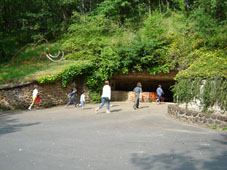
Successively occupied by cave bears and prehistoric artists, it still beholds the spectacular testimonies of those passages.
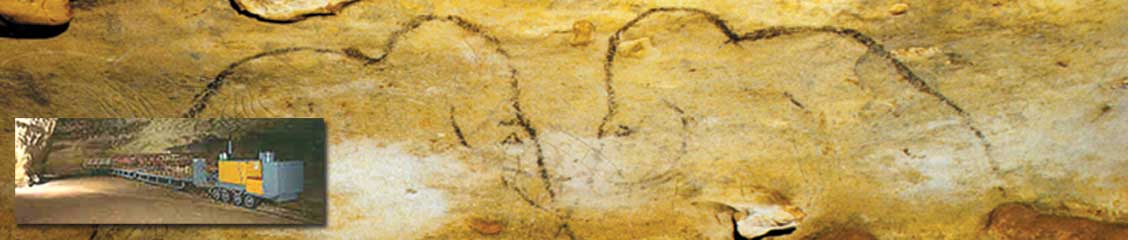
More than 250 animal figures are scattered in this underground maze, where they were left 160 centuries ago.
Sat aboard an electric train, you will dive into the mysterious cave world
and discover the art of the prehistoric hunter-gatherers.
A privileged place of knowledge broadcasting, Rouffignac regularly receives scientific exhibitions.
Monument historique

Caves of France

UNESCO World heritage

Trains in a cave, since 1959!
Caves belong to an environment where balance is precarious. When they contain cave art, respecting this balance becomes even more necessary.
Special precautions must be taken to conciliate visits and conservation, such as a limitation of the number of visitors or the management of lighting, both in time and intensity.
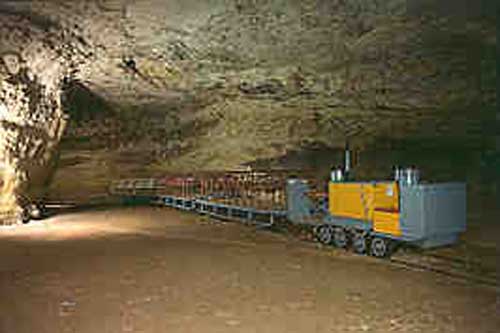
That is why the visit is done aboard electric trains, which channel visitors, provide the lighting and guaranty a relative discreetness to our repetitive frequentation of the cave. These facilities fit out as soon as 1959 are unique in an decorated cave.
Thanks to the trains, the one hour tour lets the visitor feel the impressive nature of the place and discover its prehistoric art without any tiredness or any danger for the preservation, while enjoying a real guided conference.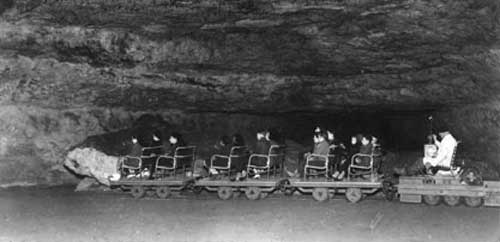
The first train of Rouffignac, starting point, in the 60th
Opening hours, prices, and reservations
Please read before booking your tickets
The tour of the Rouffignac cave lasts approximately 1 hour and 10 minutes aboard an electric train in a cold (55°F/13°C) and humid environment.
It is not possible to leave before the end of the tour, which includes extensive commentary.
For these reasons, we do not believe that a visit to the Rouffignac cave is particularly suitable for children under the age of 3.
2026 season opening dates
Every day from March 29 to November 1, 2026
- March 29 to June 30: 10:00 a.m. to 11:30 a.m. and 2:00 p.m. to 5:00 p.m.
- July 1 to August 31: 9:00 a.m. to 6:00 p.m.
- September 1 to November 1: 10:00 a.m. to 11:30 a.m. and 2:00 p.m. to 5:00 p.m.
Groups of at least 20 people are welcome by appointment only from March 1 to November 1. Please contact us at +33 (0)5 53 05 41 71 or by
2026 season prices
Families: Adults: €12 and Children (5-12 years old): €8
Children under 5 visit free of charge, but must sit on an adult's lap on the electric train.
Reduced rates for people with disabilities upon presentation of proof.
If you are visiting as a group (by appointment, minimum 20 people): Adults: €9 and Schoolchildren: €6
Tickets can still be purchased on site, but only on a day-to-day basis and subject to availability.
Tickets cannot be exchanged or returned.
If you have booked through our online ticket office, you must arrive at the cave entrance 20 minutes before your tour time to collect your tickets at reception.
Reservations are open approximately 5 weeks in advance.
Practical information:
There are guided tours in french or in english.
Nevertheless, viseo-guide exists in english, dutch, german, spanish, italian, portuguese, hebrbrew, chinese, japanese and russian.
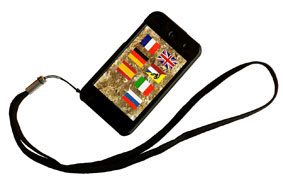
Fares : 1,50 euros






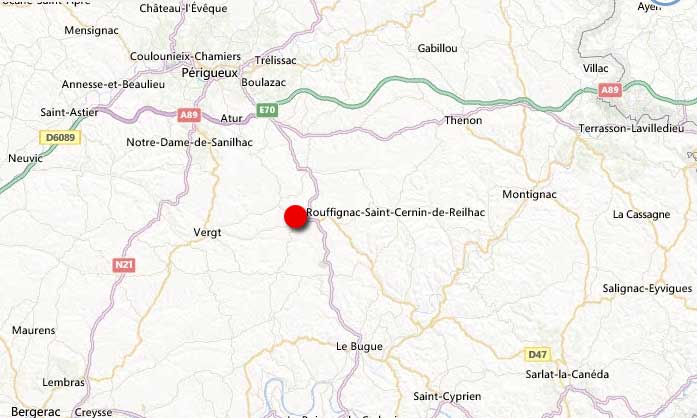
The cave is accessible from the A89 motorway via exits 16 (coming from Bordeaux) and 17 (coming from Brive, Paris, or Clermont-Ferrand).
The cave is located 4 km south of the village of Rouffignac, following the D32.
- The tour lasts approximately 1 hour and 10 minutes.
- There's a souvenir shop with a "Prehistory" bookshop on site.
- Outside, in an unspoilt natural setting, you can enjoy a shaded picnic area and a number of walking trails.
- A cave is an authentic environment, cold, dark and damp. At Rouffignac, the visit lasts more than 1 hour, and the use of the electric train is synonymous with immobility. Bring warm clothing.
- For conservation reasons, animals are not accepted.
- Payment methods accepted are cash (euros) and credit cards (Visa and Mastercard).
- American Express bank cards are not accepted.
A huge Cave
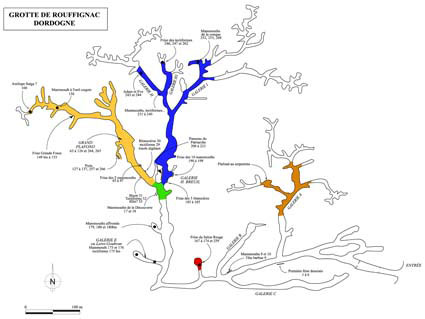
One of the largest caves in the region, Rouffignac is a development of about eight kilometres of galleries on three levels with corridors unusually voluminous in the Périgord. Some of its galleries are ten metres high, others a dozen metres wide. The whole of the cave is hollowed out in a full of flint nodules cretaceous limestone. Apart from a small brook, running along the deepest galleries, most of the network is totally fossil. Water dug mainly during the tertiary geological area. The network is considered as being dry for two or three million years.
cave occupied by bears
Cave bears were probably the first to use this network. Numerous traces of their repetitive passages remain: countless claw marks on walls and ceilings and bear dens in the clayey ground of some of the galleries. Nevertheless, bones are surprisingly rare.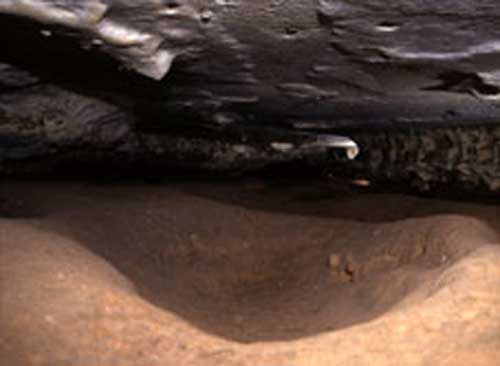
The Magdalenian artists
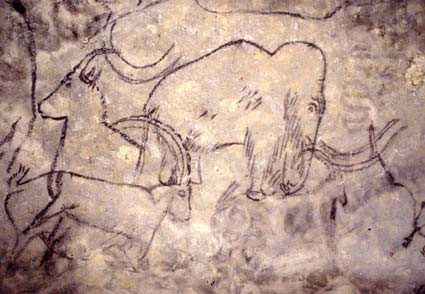
Mammoth is the main theme in Rouffignac. 158 of those pachyderms are shown on this network’s walls and ceilings. Despite the grand prestige this animal holds in our spirits, it was seldom represented by the prehistoric artists, generally to the benefit of horse and bison .Thus, when 350 ornamented caves are known in Western Europe, about a third of the mammoth representations are in Rouffignac. That is why the place is commonly nicknamed "the 100 mammoths cave". This choice made by the prehistoric artists is even more surprising that mammoth bones are rarely found in the South- Western France. This obviously adds mystery to the cave’s ornamentation.
Engraving of the Patriarch
This is one of the most spectacular among the numerous mammoth representations in the cave. It shows an elderly animal (as shown by the tusks length) and is a good example of Rouffignac art’s legibility. It also highlights the spontaneity of the artists’ gestures.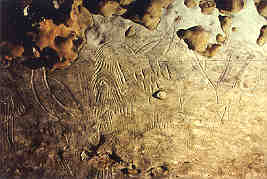
A set of mammoth and ibex.
As usually observed in the prehistoric art, other subjects go with the central theme. This phenomenon is particularly observable on the Great Ceiling, where a whirl of 65 animal figures dominates a shaft leading to the lower levels. There, mixed to the commonly seen horses and bisons, rhinoceros -extremely rare in the prehistoric art- can be admired, as well as ibex, like those surrounding the Grandfather (one of the most complete mammoth figures in the cave).
Besides engraving, black lines drawing is the second technique used by the artists of Rouffignac. This technical simplicity undoubtedly emphasises the evocative strength of those pictures, whether they are juxtaposed on the Great Ceiling, or they belong to structured sets such as the Ten Mammoths Frieze. In Rouffignac, more than anywhere else, the sensitivity and the modernity of the Magdalenian artists are perceivable.
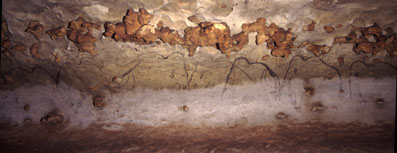
The Ten Mammoths Frieze